
AI-assisted operations
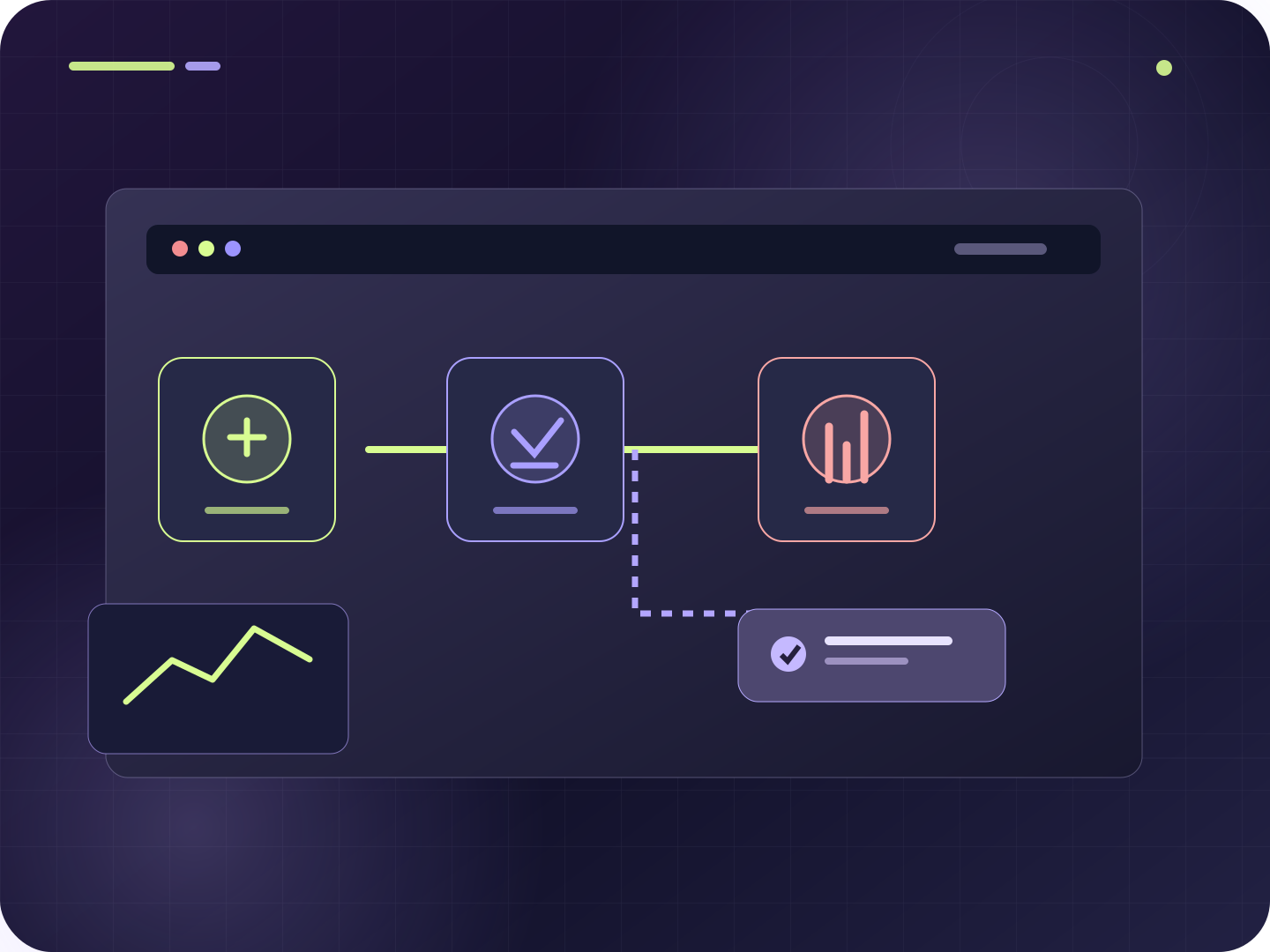
Link prompts, APIs and review points into manageable routines that support staff instead of hiding decisions.
Scope an automationConnected thinking
From an overlooked manual task to a new digital product, I connect technologies, design usable interfaces and teach the skills needed to operate them.
Areas of practice
Good software is only valuable when it removes friction, supports a decision or makes an existing activity easier to manage.
Link prompts, APIs and review points into manageable routines that support staff instead of hiding decisions.
Scope an automationDevelop a tailored desktop program, a browser component or a lightweight online service around a precise task.
Browse engineering optionsLaunch informative websites and blogs, refine search visibility and set up email tools, including temporary addresses where suitable.
Plan an online projectLearn how to inspect publicly accessible information, check provenance and document uncertainty without overstating findings.
Read the learning materialSelect, configure and understand everyday digital tools with guidance suited to your equipment and confidence level.
Request guidanceReview impersonation tactics, strengthen account habits and develop safer responses to suspicious online approaches.
Find safety guidance
Responsible process design
Before introducing a model into a business process, it pays to decide which data it may receive, how output quality is checked and which actions should require human approval.
The same principle applies to publishing systems, public-information tools and internal knowledge assistants: an understandable sequence is easier to maintain than a collection of opaque shortcuts.
Everyday scenarios
Examples of problems that benefit from selecting the right technical approach rather than accumulating tools.
Set up a content pipeline that preserves editorial approval and predictable search-engine structure.
Discuss publishingBuild habits for comparing open sources, recording links and distinguishing observation from assumption.
Learn the principlesUnderstand common scam patterns and design safer account and verification practices.
Review safety tips“Software should make the work visible enough to question it, improve it and eventually perform it with confidence.”
Design philosophy — Pacta Cyber Lab
A defined professional scope
Experience with digital information informs the tools; general software development provides the practical engineering discipline.
Tools for people working with lawful public sources, together with educational material about cybercrime risks. Individual investigations are not supplied as a service.
Understand the boundariesTechnical consulting covering applications, AI workflows, site architecture, SEO improvements and user training.
Set out the requirementA few practical examples of your daily work can help identify whether guidance, training or a custom application is warranted.